The Blood of Dawnwalker - Everything we Know so Far

The Witcher 3 comparisons are there to be made, but Dawnwalker is quickly casting its own shadow(step)

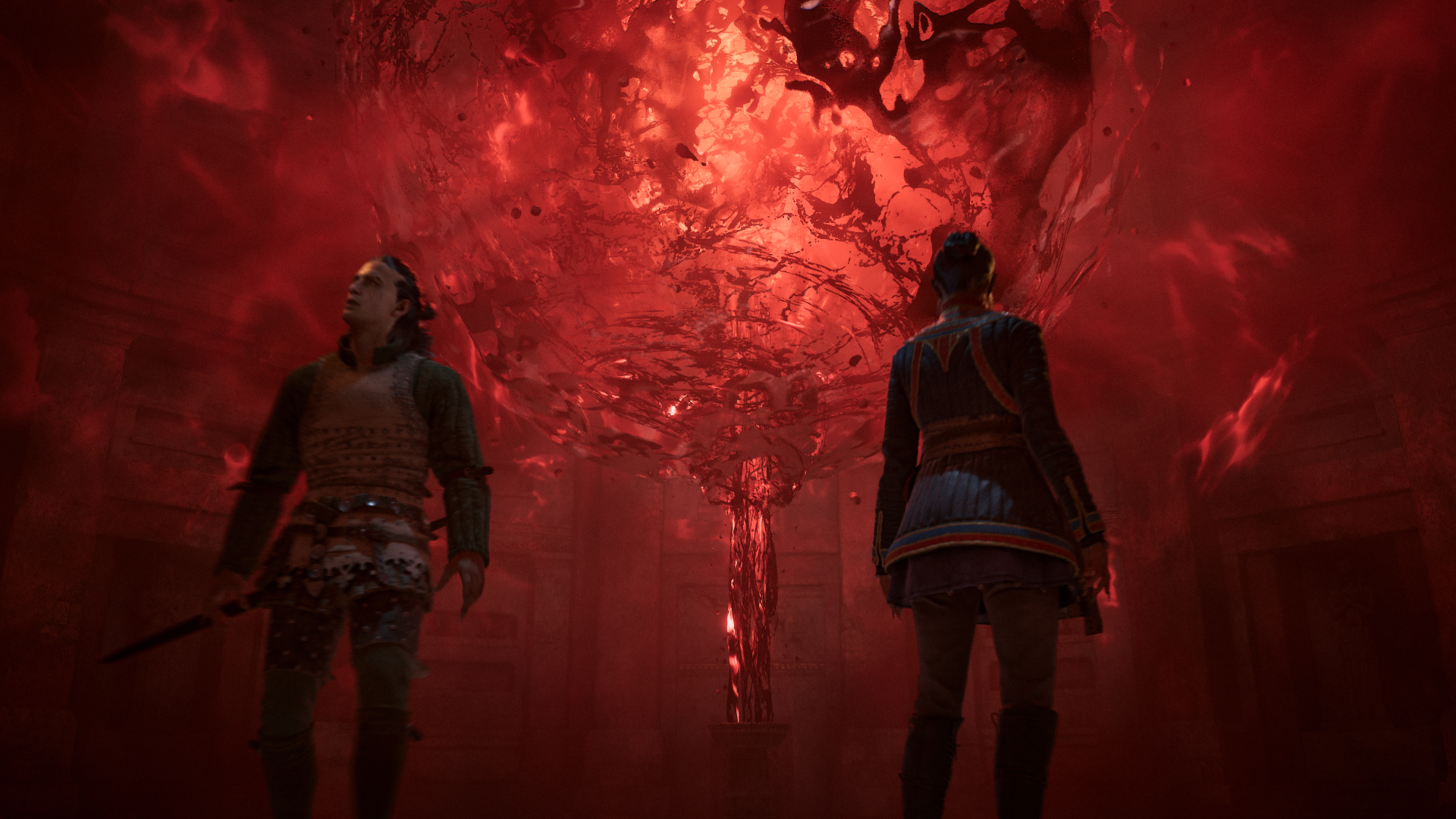
Despite its cool and stylish nature, The Blood of Dawnwalker’s initial trailer just didn't get our blood pumping. Not to the degree it should have, what with the studio’s pedigree and all. But the more Rebel Wolves reveals about its debut title, the more we’re being sucked in. This is a title with a clear DNA, that much can’t be denied, but similarly to how Dying Light managed to drop any comparisons to Dead Island in its early days, despite those being thick and fast (alongside Mirror’s Edge), we’re getting the sense that this game’s two key pillars in its “Narrative Sandbox” and its dual gameplay loops via Day and Night will not just afford it the differentiation from Geralt and his exploits it deserves, but could also elevate it.

Here is a game that sells itself as an “action-RPG” but one that splits your play into two parts thanks to the cursed nature of its main protagonist, Coen. Human by day, vampire by night, Coen is also tasked with saving his family within a set timeline -- 30 days and 30 nights. This affords Rebel Wolves unique possibilities from a design perspective, the type not often seen in ‘traditional’ action-RPG make-ups. On the one hand, we have the disparate elements of man and monster, but we also have two unique times serving up new characters, locations, events and more thanks to the sun and moon periods of a given day. And vampires aren’t the only beasties in the 14th century-set kingdom of Vale Sangora in which the game is mostly set, nestled in the very real Carpathian Mountains. Moreover, that timeline is unforgiving and becomes a kind economy or resource you need to manage. Side-quests suddenly ‘cost’ the player more and so risk-reward comes to the fore, though time doesn't flow as naturally as other open-world RPGs of this nature, so you do have some control over elements. But more on that in a minute.

In short, there’s a lot here that is very, very different to what Dawnwalker’s sheen might be telling you.

So while we’re only eating up as much information as you, as the studio is willing to share, we’ve worked diligently to compile all of that into a handy ‘list’ with extrapolative parts, given we know this genre well, these devs and have sort of been around the traps for a while. We’ve also taken the liberty to share our own concerns over some of the elements shared and seen thus far into a sort of ‘catch-all’ piece. We’ll also update this as more comes along from Rebel Wolves, so be sure to keep checking back but for now, sate your crimson vampiric appetite with everything we know about The Blood of Dawnwalker below.

The Blood of Dawnwalker

Genre: Action-RPG
Developer: Rebel Wolves
Publisher: Bandai Namco
Release Date: 2026
Classification: TBC
Date: January 13, 2026

There is no Spoon

We’d be silly to avoid the number one aspect the studio is leaning into, which is the game’s “Narrative Sandbox”. What’s interesting about that as a ‘buzz descriptor’ is Rebel Wolves caveats the sentiment with the notion that there’s no difference between side quests and the game’s Golden Path. Rather, how you approach your personal experience through the game-world and any quests you engage will allow you to “weave” your own narrative here.

"It also clearly didn’t want the Mass Effect 3 'narrative urgency' to plague the experience, either..."

This was a conscious choice for the studio because the time-as-a-resource element (more on this shortly) needed some level of urgency, without forcing the player to rush, but it also clearly didn’t want a Mass Effect 3-level of 'narrative urgency' to plague the experience, either; “hurry up and save Earth, Shep! It's literally being attacked right now! Also, someone’s sister was last seen on another planet ages away, can you go see if they need some juice or chips or some shit, please”.

So the setup Rebel Wolves created out of necessity has wound up being one with more agency for the player, albeit capped, while allowing the writers to flex large, regardless of any given quest’s outcome. In fact, you can even charge the castle to attempt to rescue your family right out of the gate, if you like. Though that comes with its own obvious challenges.

In many ways, all of this is far closer to the narrative and personal journey structure of Kingdom Come II: Deliverance than The Witcher 3: Wild Hunt (read our “Would you like to know more?” box out for… MORE!), but we welcome it as a design choice rather than an investment setup that goes unnoticed or unrewarded when set against the Golden Path. Additionally, and as we’ll explore in more depth below, the day, night and timeline resource management of each quest (or time-as-a-resource) will determine how it plays out. We know there are dialogue options but that what you get as a human during the day versus that of a vampire at night are very different, as are the people, or things, out and about in the game-world. 

The genuine hope and one part of a handful of our concerns for the game is that this is less fluid or emergent than Rebel Wolves is suggesting and is in fact, far more binary, but that’s all that is for now -- a concern. On paper, this actually all sounds innovative and even revolutionary, to a degree.

Would you like to know more?
As we explored in our linked review for Kingdom Come II: Deliverance, Warhorse's action-RPG epic was as much a distraction simulator as it was a grandiose story ripped from actual historical events and personalities. How you played that game as Henry and how you wove him and his story through said history wound up being one of its strngest elements. Certainly Warhorse new players would engage in this way, but Rebel Wolves looks to be taking the concept to more deliberate and meaningful heights. Particularly with game director Konrad Tomaszkiewicz revealing that players might only *really* be able to achieve an 80% side-quest and Golden Path completion rate upon rolling credits...

The Duality of Man, Sir!

Helping forge the “Narrative Sandbox” is Coen’s dual nature. He’s both a vampire and a silver-poisoned human (read our second “Would you like to know more?” box out for… MORE!), each of which afford him unique possibilities, exploits and more in a game where each and every story is being set as just as important as the last, or next. And while not all quests will be accessible between both forms, those that are, or those that allow the choice of a day or night approach at any given point, will naturally give you a different experience as well as potentially different boons, items, friends, enemies, abilities and… so on. 

"If your conscience is too pure and you starve him of his bloodlust, he could snap at any moment in the game and kill someone of merit or import..."

The mind naturally swims with the amount of possibility here. Even from a world and level-design sense this is important because it means the writers and quest designers and artists have had to think about additional paths, loop-accessible specifics and how those pertain to quests and outcomes and… again, it’s all very, very promising to the point of concern. But so far Rebel Wolves has addressed this. Worrying that players would only play as the stronger vampire personality meant it has had to challenge how they exploit that with Coen’s need to feed. If your conscience is too pure and you starve him of his bloodlust, he could snap at any moment in the game and kill someone of merit or import that genuinely affects your specifically-woven narrative. And it is indiscriminate, as far as we know (ie, not scripted).

Moreover, the studio also made sure Coen, in silver-poisoned human form, was still very capable with genuine sword-handling skills. In fact, in everything we’ve been exposed to so far, swords are a huge part of the makeup of the world and for Coen as a character looking to defend himself, or take the pointed initiative when needed. That said, our concern here is both that we don’t know how deep this runs, and that while fluid in motion, we see shades of The Witcher 3’s sword combat here which divided fans and became less and less dynamic the more you knew how to play leaving us pondering what’s actually different in Dawnwalker and how the game’s medieval roots help shape this.

Would you like to know more?
Working in mines and gaining a measure of silver poisoning gave Coen a natural resistence to Brencis' attempt at turning him into a fully fledged vampire. This allows him to remain human during the day, but at night he becomes a vampire with all the fixins - Shadowstep, which allows him to teleport short distances. Planeshift which allows him to walk on walls or ceilings. Heightened Senses which allow him to Focus to track clues or hear further away conversations. Voracious Bite is the ability to suck blood from a victim in order to replenish lost health as well. More is yet to be revealed, of course, but there's a seemingly disparate balance(?) between both forms and times of day which should keep things interesting and unique based on each player's available approach to any given quest or situation.

Not the Aussie Hardcore Band, Carpathian

Our final deep-dive into what we know of Dawnwalker’s setting, before we share our essential list, is in the fictional kingdom’s setting of the Carpathian Mountains. As mentioned, the period is the “14th century” and the region has been ravaged by both war and the plague. Both of these crippling events have led our vampire overlords to Vale Sangora, feasting figuratively on the kingdom’s dwindling self, making it a prime location to settle in as new blood-loving landlords who don’t mind having an available flock to snack on outside.

"Conflict and the Black Death have allowed these creatures to not only emerge, but to overthrow the local lords..."

We’re told that in the mythos of the game-world, taking cues from old pen and paper RPGs, mind (read our third “Would you like to know more?” box out for… MORE!) vampires have had to hide and cower in the shadows of the region for centuries. Conflict and the Black Death have allowed these creatures to not only emerge, but to overthrow the local lords. What their ultimate rule entails, however, is still a mystery the studio hasn’t shared -- do they have designs for more conquering? Is there something darker at play given their ilk? And why have they taken Coen’s family at all?

Questions aplenty about the setting, but the land and time period lends us some clutchy clues -- Bran Castle of Dracula fame, for one, was built in this time, while plenty of power struggles and wars took place between many cities in and around the Carpathian Mountains region and in greater Hungary. It was also a time of growth and expansion for Monastic Orthodoxy and religion in general, yet was also an era where paganistic traditions still existed among rural settlements, and myth and legend held onto a blurred handle in the imaginations of myriad superstitious folk. 

So, plenty here to draw upon and, honestly, no genuine concerns beyond ensuring we get the best visual and tonal representation of the valley and surrounding regions in which the game is set.

Concerned Vampire Emoji or, all *Else on the Agenda (*there’s a lot)

Here’s the briefest of descriptions of what we know outside of the above, below, representing The Blood of Dawnwalker as:

  • Built in Unreal Engine 5 from ex-CD Projekt RED devs and others.
  • An open-world action-RPG in the vein of The Witcher 3: Wild Hunt.
  • Set in 14th century medieval Europe in the Carpathian Mountains.
    - Despite this, the game’s actual kingdom is fictional.
  • Centres around vampires, however, other beasts from Eastern European folklore and mythology also exist in the game’s eco system.
  • Despite being an open-world, the game's two core pillars, as explored above, are more central to the experience. Said open-world, then, is routed rather than a playground. At least, seemingly.
  • There is no difference between the golden path and side-quests; it's all world narrative and how you “weave” them together. This promotes multiple playthroughs.

"Blood is a tax and humans taste better than traditional ‘livestock’, which makes at least some of Brencis wanting control of the kingdom make sense..."

  • Time is quite literally a resource and a reminder you have a task at-hand -- like having only so much oxygen on a dive while exploring an undiscovered kingdom under water. 
  • Seamless in-engine cut-scenes that role in and out of dialogue moments not too dissimilar to those of The Witcher keep things ‘in the moment’, so to speak.
  • Brencis is the game’s big bad and by taking over Vale Sangora, he demands…
    - Loyalty, fealty and blood. In fact, blood is a tax and humans taste better than traditional ‘livestock’, which makes at least some of his wanting control of the kingdom make sense… but more awaits discovery.
  • Combat is largely sword-based and directional, not too dissimilar to that of Kingdom Come II: Deliverance, and not the first time that game’s influence or blueprint has been raised here.
  • Focus Mode is the same as Geralt’s own version of Detective Mode, perhaps best aligned with Batman’s in Rocksteady’s Arkham series.
    - Concern: all leads, perps and outcomes are within a 30-metre radius and all too easy to work out -- these games need Carmen Sandiego-level area and lead jumps, as well as more dynamic deduction and exploratory outcomes.
  • Time is ever-present as both a tool and taskmaster, which makes all activities marked with a ‘passage of time’ hourglass a risk to engage in -- what is risk-reward in Dawnwalker?
  • Reading books can grant new skills or give you experience; but each is a part of “time-as-a-resouce” meaning your tertiary skills, like the real-world, still cost you -- no Scandinavian socialism here.
    - Your playthrough, though, could theoretically revolve around building skill and strength and buffs to just charge ahead, so there’s potential merit here.
    - Concern: This is more distraction than player-choice and is designed to trip-up… just sayin’. 
  • During the day, Coen can use “Hex Magic” as a bolstering element (again, not too dissimilar from Geralt’s “Signs”), but these rely on a type of perfected combat to recharge and be used properly, making day time combat skill-based.
  • At night and as a vampire, Coen has ferocious claws and power to call upon, but this is dictated by [blood] hunger and the enemies he’s facing. He can, however, also use a sword (he also has an attack that can replenish health because, you know, human poppers..). The goal between the two was to ensure no one type of combat persona was better or more powerfully positioned than the other.
    - Concern: There’s no room yet to know if there’s an Incredible Hulk level of animosity between Coen’s two forms/personalities, which absolutely should be front and centre. “Night Guy vs Morning Guy” as Seinfeld once quipped… should the vampire rage be a hangover for human Coen? And, in contrast, should Coen’s human approach be a mess for the former to clean up? Or can it get more dynamic and even messier? That’s the query, that’s the opportunity, that’s the challenge…
  • Players can choose to not drink human blood as mentioned earlier, if ou missed it -- scroll up. This is if they'd prefer a more humane approach to things and so animal options exist in the world sate your hunger, but it's nowhere near as tasty as humo blood. This at least means there's a functioning ecology outside of the main city.
    - Concern: Said system is less dynamic with no predation or functioning food chain. It would be cool if choosing this route meant you were thinning out the local wildlife given you apparently don't gain as much from animals as from humans, but we just dont fully know how all of this will work yet.
  • You can choose when you feel you've 'weakened' Brencis and his forces enough to charge the castle and try to rescue your family, and can do this from the start ahead of the time limit coming to an end, as we've mentioned. But there's a sense that no matter the outcome, the game might not quite finish here...
Would you like to know more?
Rebel Wolves has consistently bandied about wanting the narrative and decision-making structure of Dawnwalker to be closer to traditional Pen & Paper RPGs than videogames. This immediately tells us the studio wants to allow players to have more agency and for outcomes based on decision-making to be dynamic and, largely unexpected. This will likely work in tandem with the introduction of folkloric entities into an otherwise loosely historical setting and era. It should also mean players will learn on-the-fly about the rules setting up the game's cryptid cast of which we know, and have already mentioned, that vampires aren't the only non-humans running about. In short, we expect shock and awe and a lot of potential trial and error or, at least, trial and live with it aspects.

The Waiting Game

All of the above is us flexing speculative, sharing what we know and also casting a bit of hope into this new universe. What we’re confident of overall, however, is that this is going to be an engaging story more than a Witcher-like. It has its similarities as we’ve explored, but it also feels like it’s working overtime to be as different and unique as possible, and not out of spite. Rather, this all has a sense of evolution to it and we’re excited to learn more as release approaches.

"Things change rapidly in this industry though, so watch this space is all we can say..."

As of posting there’s still an almost full year ahead of us, so there’s no genuine scope on a release date as yet, but at the moment The Blood of Dawnwalker is definitely 2026-bound on PC, PS5 and Xbox Series X. There’s obviously interest in a Nintendo Switch 2 version as well, but so far Rebel Wolves is focused on the three aforementioned platforms -- things change rapidly in this industry though, so watch this space is all we can say. Also, to just keep up with new details; as mentioned in our opening salvo, we’ll update this feature as more information becomes available and will re-post and highlight those for your convenience, so try not to stay in the dark. Unless of course you’ve heard enough and don’t want to spoil the upcoming experience for yourself. 

We won’t hold a vampiric grudge, we promise. 

About the author

Written By Stephen Farrelly
Stephen Farrelly is a veteran journalist and editor with more than two decades experience in the worlds of gaming, entertainment, lifestyle and sport. He is a proud pug dad, loves art in all forms (particularly street and tattoo culture), and is the director of Swear Jar Editorial and Media Pty Ltd, this site's owner and publisher. When not dispensing words, he's also dispensing boutique beers as a taproom fixture at Bracket Brewing in Marrickville, NSW...

explore more across our site

Comment

Please note, comments need to be approved before they are published.